International student mobility continues to evolve rapidly, shaped by global politics, affordability concerns, technology, and shifting student priorities. As we move into 2026, universities that succeed internationally will be those that adapt early — not just to where students are coming from, but to how they research, engage, and choose institutions.
At UnivAssist, we work closely with institutions and counselors across global markets, giving us a front-row seat to the trends shaping international enrollment. Below are the key student mobility trends universities can’t afford to ignore in 2026 — and what they mean for your recruitment strategy.
While the U.S., UK, Canada, and Australia remain top destinations, students are increasingly considering a broader mix of countries. Factors such as visa stability, post-study work options, affordability, and safety are driving students to compare multiple destinations rather than defaulting to just one.
What this means for universities:
Institutions must clearly articulate their value proposition, including career outcomes, support services, and return on investment, to stand out in a more competitive global landscape.
Cost sensitivity is no longer limited to certain regions. Students and families across markets are asking tougher questions about tuition, scholarships, living expenses, and long-term career outcomes.
Increasingly, students want to understand:
What this means for universities:
Recruitment messaging must go beyond rankings and campus beauty. Clear, honest communication around affordability and outcomes builds trust — especially when reinforced by counselors.
Students are gravitating toward programs with clear pathways to employment, particularly in areas such as:
At the same time, interdisciplinary programs and flexible curricula are gaining attention.
What this means for universities:
Program positioning matters. Institutions should ensure that academic offerings are explained in practical terms, highlighting internships, experiential learning, and alumni outcomes relevant to each market.
Despite the rise of digital platforms, high school counselors continue to play a pivotal role in student decision-making, especially in international contexts where families value trusted guidance.
Students rely on counselors to:
What this means for universities:
Long-term counselor engagement — through school visits, fly-in programs, workshops, and consistent communication — is more important than ever.
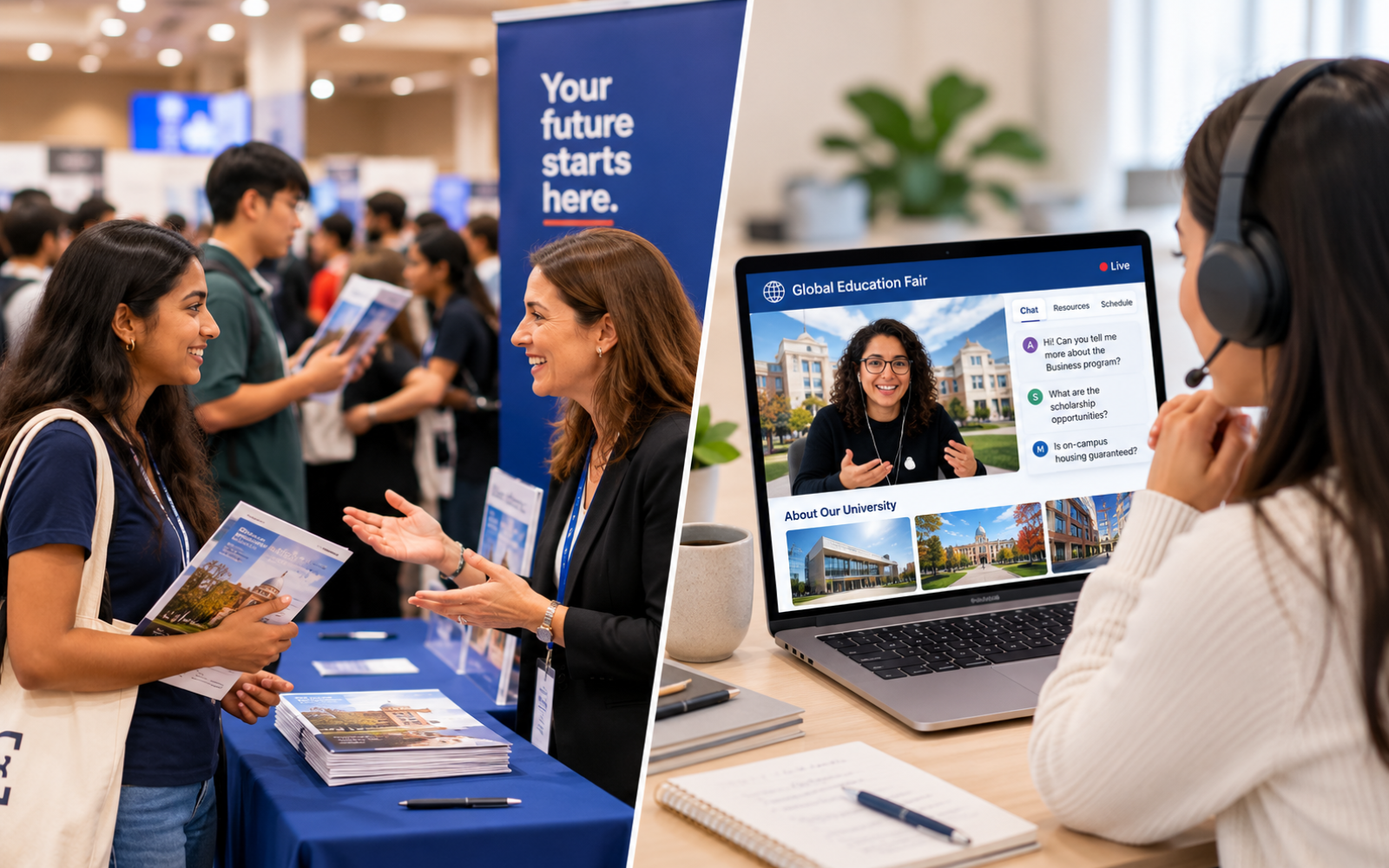
The debate between in-person vs. virtual recruitment is over. In 2026, the most effective institutions are using hybrid strategies that combine:
Virtual engagement expands reach, while in-person interactions deepen trust.
What this means for universities:
A balanced recruitment strategy allows institutions to maximize budgets while maintaining strong market presence — particularly in large or geographically dispersed regions.
Beyond traditional sending countries, universities are seeing growing interest from emerging and secondary markets, where student demand is rising but competition may be less saturated.
These markets often require:
What this means for universities:
Success in these regions depends on planning and partnership — not one-off visits. Institutions that invest early often benefit from long-term enrollment growth.
Today’s students expect timely communication and personalized outreach throughout the recruitment journey. Generic messaging is easy to ignore — especially when students are exploring multiple destinations simultaneously.
What this means for universities:
Data-informed recruitment strategies that support tailored communication can significantly improve engagement, conversion, and yield.
Student mobility in 2026 will be defined by choice, comparison, and caution — but also by opportunity. Universities that understand these emerging trends and respond strategically will be best positioned to attract and enroll students in an increasingly complex global environment.
At UnivAssist, we support institutions through strategic consulting, in-country engagement, virtual recruitment, and long-term relationship building — helping universities adapt to change while staying focused on sustainable enrollment growth.
Interested in refining your international recruitment strategy for 2026?
Connect with us to explore how data-driven planning and global engagement can support your enrollment goals.