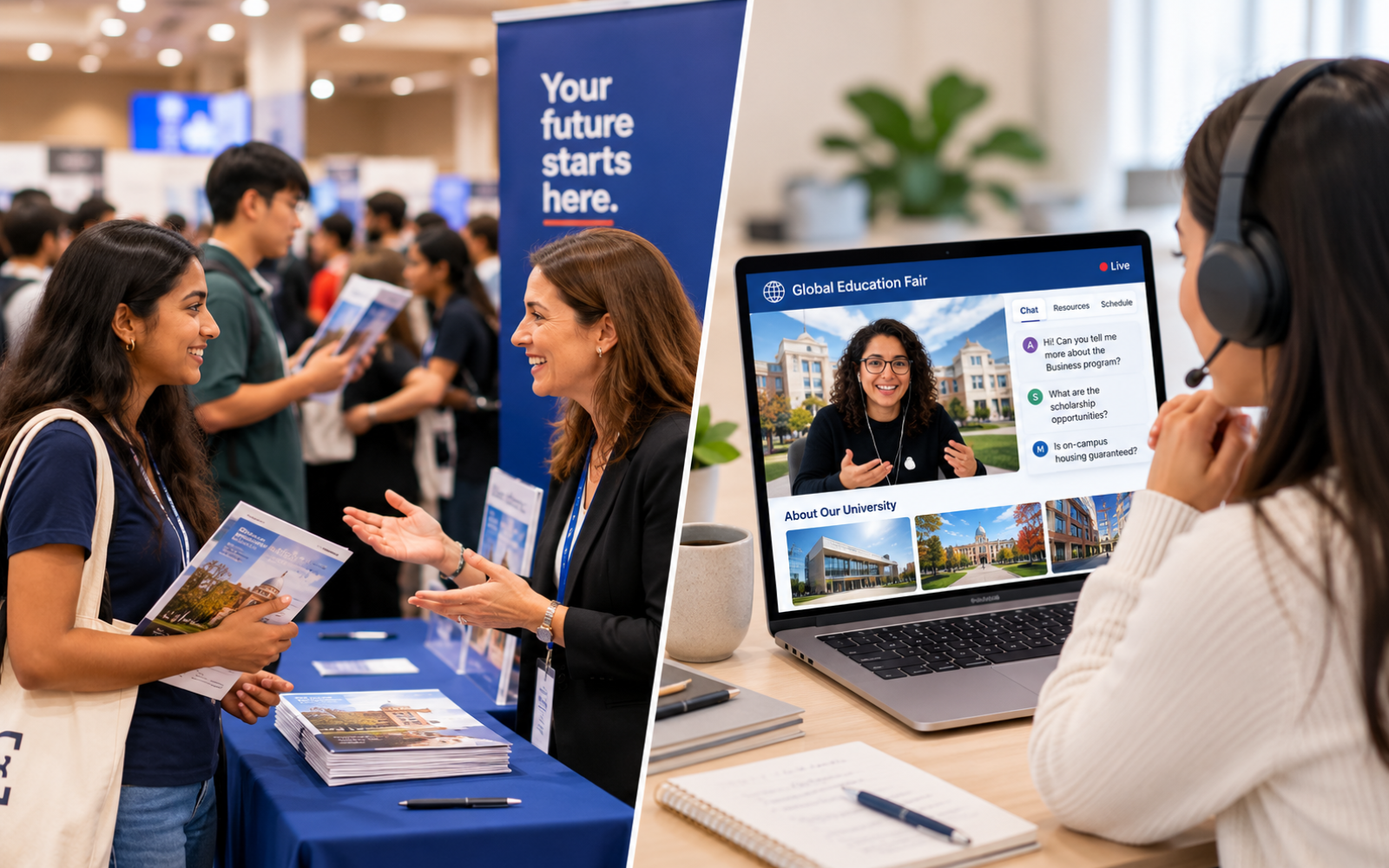
When universities think about international student recruitment, they often focus on prospective students—their interests, preferred destinations, and application behavior.
But behind many successful international enrollments is another influential audience that deserves just as much attention: high school counselors.
Around the world, counselors help students navigate one of the biggest decisions of their lives. Counselor engagement is just one component of a successful international enrollment strategy. To see how it fits into the bigger picture, read our guide on How to Recruit International Students Effectively. They answer questions, provide guidance, compare university options, and support families throughout the admissions process. As international education becomes increasingly complex, their role has only grown in importance.
For universities, building meaningful relationships with counselors isn't simply good networking—it's a long-term recruitment strategy.
High school counselors serve as trusted advisors throughout the university search and application process.
Depending on the country and school, they may help students:
In many international schools, counselors are one of the first people students consult when they begin considering studying abroad.
Because of this, counselors often have a significant influence on which universities students ultimately explore and apply to.
Students today have access to more information than ever before.
They can research universities online, attend virtual events, and connect directly with admissions teams.
Yet despite this abundance of information, students and families continue to seek guidance from trusted professionals who understand their goals and can provide personalized advice.
Strong counselor relationships help universities:
Unlike a single recruitment event, counselor relationships can continue generating value for years.
One of the greatest advantages counselors offer is local insight.
They understand:
These insights help universities better understand how their programs are perceived within a specific market.
They also allow institutions to refine messaging so it resonates with both students and families. Understanding local perspectives also helps universities determine which international recruitment markets align best with their goals and academic offerings.
Meaningful counselor engagement doesn't happen during a single school visit.
Like any strong partnership, it develops through consistent communication and mutual trust. In many regions, maintaining those relationships throughout the year requires ongoing local engagement and support.
Universities that invest in counselor relationships throughout the year often see stronger engagement than those who only appear during recruitment season. Many institutions combine engagement with international recruitment tours to maximize their time in-market.
Successful engagement can include:
The goal is not simply to promote an institution—it's to become a trusted resource.
One of the biggest misconceptions universities have is that counselors want more marketing materials.
In reality, many counselors are looking for something much more valuable:
They want university partners who understand their students and support their work.
The strongest partnerships are built on:
Universities that approach counselor engagement as relationship-building—not sales—often develop deeper and longer-lasting connections.
Counselors value opportunities to continue learning about higher education trends, admissions practices, and global student mobility.
Professional development events provide universities with opportunities to:
Many universities strengthen these relationships by participating in professional development events designed specifically for high school counselors. These conversations frequently generate insights that are difficult to gain through recruitment events alone.
Counselors interact with hundreds of students every year.
They hear firsthand:ement
This feedback can help universities refine everything from messaging to market selection.
Rather than relying solely on application data, institutions can gain valuable qualitative insights directly from those working with students every day.
Virtual events, social media, and AI-powered search have transformed how students research universities.
However, technology hasn't replaced trust.
Students still seek reassurance from knowledgeable professionals before making significant educational decisions.
Counselors continue to play an essential role in helping students evaluate information, compare options, and make confident choices.
Technology has changed how universities communicate.
It hasn't changed who students trust.
The strongest international recruitment strategies aren't built on one successful event.
They're built on relationships that grow over time.
Universities that consistently engage counselors often benefit from:
These outcomes rarely happen overnight—but they often become some of an institution's most valuable recruitment assets.
As international student recruitment continues to evolve, universities will need to think beyond individual recruitment activities.
Success increasingly depends on building trusted relationships with the people who guide students throughout their educational journey.
High school counselors are more than influencers in the admissions process—they are partners in helping students find the universities where they will thrive.
Institutions that recognize this and invest in authentic counselor engagement will be better positioned to build sustainable international enrollment for years to come.
Continue exploring international recruitment strategiesIf you found this article helpful, you may also enjoy: